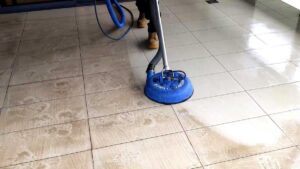

You don’t need a machine to clean carpet. Baking soda, white vinegar, warm water, and a few drops of dish soap can handle most spills, light dirt, and everyday smells.
But there’s a catch. “Correctly” is a narrower path than most guides admit. We have cleaned carpets for over 23 years, and a good share of our jobs are carpets someone tried to clean at home first. It’s almost always the same three mistakes: too much water, scrubbing instead of blotting, and too much soap. Each one leaves the carpet harder to clean than it was before anyone touched it.
The short version: vacuum well, spray lightly, blot instead of scrub, use less soap than feels right, test first, and dry it fast.
Think of it like washing a muddy car
Here’s the idea that matters most, and it has nothing to do with cleaning products.
Nobody takes a dry brush to a muddy car. You hose the mud off first. Everyone knows why: if you scrub dry dirt across paint, the dirt acts like sandpaper. You don’t get a clean car. You get a scratched one.
Carpet works the same way, and almost nobody treats it that way.
Most of what’s in your carpet is dry dirt and fine grit. If you spray water on it and start rubbing, you are pressing that grit into the carpet fibers under pressure. The stain might fade. But the fibers get frayed and worn in that exact spot.
This is why we tell people the two rules that feel backward:
- Vacuum before you add any water. Get the grit out while it’s still dry and loose.
- Press, don’t rub. Effort is not what cleans carpet. The right product and enough patience are.
Scrubbing harder feels like it should work better. With carpet, it’s the fastest way to cause damage you can’t undo.
What hand cleaning can and can’t reach
Your carpet has three layers. There’s the pile you can see and walk on. Under that is the backing the fibers are tied into. Under that is the pad.
A cloth and a spray bottle only reach the first layer.
So the real question isn’t whether home cleaning works. It’s how deep the problem goes. Fresh spills, surface dirt, light traffic marks, and everyday smells all live in the top layer, and you can fix all of them yourself.
Anything that soaked deeper cannot be reached from the surface. Pet urine, a drink nobody blotted, years of ground-in dirt — that sits in the backing or the pad. You can clean the top a dozen times and it will keep rising back up.
What you’ll need
A vacuum · baking soda · white vinegar · mild dish soap · warm water (not hot) · a spray bottle · white cloths or towels · a soft-bristle brush.
None of these will hurt your carpet on their own. The harm comes from using too much, or using it the wrong way.
Step by step
1. Vacuum first, and take your time
Most of the dirt in a carpet is dry, and dry dirt comes out much more easily than wet dirt. Add water first and loose grit turns into mud that sinks deeper.
Go slowly. Cover the same area more than once, moving in different directions. This one step does the most for your results, and it’s the one people skip.
2. Mix your cleaner
One cup of warm water, one tablespoon of white vinegar, and two or three drops of dish soap. Put it in a spray bottle and shake it gently.
That mix is weak on purpose. Many guides tell you to use equal parts vinegar and water. That’s about 16 times stronger, and at that strength you risk changing your carpet’s color or wearing down its stain-resistant coating. Start weak. You can always clean an area twice. You can’t undo a faded patch.
3. Test a hidden spot
Try inside a closet, behind a door, or under a couch. Spray a little, blot it, and wait ten minutes.
Check the cloth as well as the carpet. If you see color on the cloth, the dye is coming off. Stop there.
4. Spray lightly and blot
Spray just enough to make the spot damp, not wet. Press a finger into it. If moisture comes up, you used too much.
Now blot. Fold a white cloth, press it down, hold for a few seconds, and lift. Move to a clean part of the cloth and do it again. Start at the outside edge of the stain and work in. If you go the other way, you’ll push the edges outward and make the stain bigger.
Don’t scrub. As we covered above, rubbing frays the fibers. Frayed fibers catch the light differently, so you end up with a fuzzy, slightly lighter patch right where the stain was. You’ve traded a stain for damage that cleaning can’t fix. Of all the damage we get called out to repair, this is the most common.
5. Repeat if you need to
Spray, blot, wait, look. Three gentle rounds beat one hard one.
If three rounds don’t improve things, stop. What’s left is deeper than you can reach, and pushing harder only risks the fibers.
6. Dry it faster than you think you need to
Press a dry towel down hard to pull the moisture up. Stand on it if that helps.
Then get air moving. Turn on ceiling fans. Point a floor fan across the carpet instead of down at it. Run your air conditioner if you have one, because AC pulls moisture out of the air as well as cooling it. Only open windows if it’s drier outside than inside.
Stay off the carpet until it’s dry. Don’t put furniture back on damp carpet either — heavy legs leave dents that never come out and trap moisture underneath. Depending on your carpet, the humidity, and how much air you can move, that can take anywhere from a few hours to a full day.
What each cleaner is actually good for
White vinegar and water — light spills, food marks, dullness, and mild smells. One tablespoon per cup. Skip it on wool and silk, which react differently to acids than man-made fibers do. Go easy on carpet with a stain-resistant coating, too. Cleaning with vinegar over and over wears that coating down, which means future spills soak in faster than they used to. Hardly anyone mentions that, and it’s the real cost of using vinegar all the time.
Baking soda — smells. It’s genuinely good at this, because it soaks odors up instead of covering them. Sprinkle a thin, even layer, leave it 15 to 30 minutes, then vacuum it up well. You’ll see advice to leave it overnight. We wouldn’t. The grains are fine enough to work down into the carpet backing where a vacuum can’t get them, and fine enough to slip through some vacuum filters into the motor. It does very little for stains.
Mild dish soap — grease, oil, and food. Two or three drops per cup. Really that little. Soap is made to be rinsed away with lots of water, and you can’t rinse a carpet by hand. Whatever soap you leave behind stays in the fibers and attracts dirt. If a spot you cleaned turns gray faster than the carpet around it, leftover soap is almost always why.
Two more worth knowing: club soda helps lift fresh wine and coffee, but only while the spill is still wet. Hydrogen peroxide at 3% works on blood and some pet stains, but only on light-colored man-made carpet. It’s a mild bleach, so test it first and accept the risk. We mention it because it works, not because we’d reach for it.
What about a rented machine?
The obvious question if you’re reading a guide about cleaning without one.
Rented units — Rug Doctor, Bissell, and similar — sit between hand cleaning and professional equipment, and they can do a decent job on a lightly soiled room. Two things are worth knowing before you book one.
They put down more water than they take back up. Professional truck-mounted systems generate far more vacuum than a rental unit can, which is why a professionally cleaned carpet dries in hours and a rental-cleaned carpet can stay damp for a day or more. A carpet that stays wet longer risks odor and, in the worst case, mold forming in the pad underneath where you won’t see it.
The detergent is the harder problem. Rental machines run on high-foam consumer detergent that’s difficult to extract fully. Left in the fiber, it attracts soil — which is why carpets often look excellent for two weeks after a rental clean and then noticeably worse than before.
If you use one: run half the recommended detergent, do two water-only passes at the end, and put fans on it immediately.
Pet urine needs its own answer
Because it isn’t really a stain.
Urine soaks through the pile, into the backing, and usually into the pad. As it dries, it turns into crystals. The smell comes from bacteria feeding on what’s left behind.
That explains two things people find confusing. The smell comes back on humid days because moisture wakes those crystals up. And store-bought sprays fail because they freshen the top of the carpet while the source sits an inch below it.
What helps: blot a fresh accident right away, and press much harder than you would for a spill. Then use a cleaner labeled enzyme-based. Enzymes break down what causes the smell instead of covering it. Follow the wait time on the label, which is usually longer than people give it.
What doesn’t help: vinegar and baking soda on their own. They’ll cut a faint smell for a while. They won’t touch crystals in the pad.
When to stop trying: if the same spot has been hit many times over months, or the smell returns every time it gets humid, the pad is soaked. Nothing you put on the surface will reach it. Sometimes the pad has to be replaced, and it’s better to learn that early than after six months of buying products.
Can you use a steam mop?
Some come with a carpet attachment, and they will freshen the surface. But a steam mop pushes hot moisture into the carpet and takes nothing back out. That means long drying times on man-made carpet, a risk of shrinking on wool, and on carpet with a rubbery backing, steady heat can break down the glue holding the layers together.
Fine once in a while. Not a cleaning method.
When to stop and call someone
- A stain keeps coming back — it’s rising up from the backing or pad as the carpet dries.
- The smell returns on humid days — something is in the pad.
- Dullness that won’t lift — packed-in dirt below the surface needs hot water extraction rather than surface cleaning.
- Still damp after 24 hours, or it smells musty as it dries.
- Wool, silk, or antique carpet — these need care matched to the fiber, and they’re expensive to get wrong.
- It’s been more than 12 to 18 months. Many carpet makers require a periodic professional clean to keep the warranty valid.
If you do decide to hire someone, it’s worth knowing whether you’re expected to tip them before they show up — the answer surprises most people.
FAQ
Can I clean carpet without a vacuum?
You can, but not nearly as well. Sweep with a stiff broom or work the carpet with a brush and pick up what comes loose. Getting the dry dirt out first is what makes everything after it work.
Can I use laundry detergent on my carpet?
No. It’s built to foam up and be rinsed with lots of water, and neither of those applies here. The leftover residue is hard to remove and pulls in dirt.
How often should carpet be cleaned professionally?
Every 12 to 18 months for most homes. Every 6 to 12 months if you have pets, small kids, or heavy foot traffic. Check your warranty, since many list a required schedule.
Will vinegar bleach my carpet?
Vinegar isn’t bleach, but it is an acid, and some dyes react to it. Water it down as described and test first. The more likely damage from using it often is to a stain-resistant coating, not to the color.
Can homemade cleaners remove deep stains?
No. They only work on what’s in the top layer. Anything that reached the backing or the pad is out of range, no matter how many times you repeat the treatment.
Based in Orlando, Florida, Budget Steemer has provided IICRC-certified carpet cleaning across Orange County for over 23 years.